The Codeborne Christmas beer brewing diaries
It was a sunny day in September. Quite warm for that time of year. We were sitting with my colleague Tiit on the roof terrace in the Codeborne office as we do every now and then. I ask him for advice on occasion - after all, what are the more experienced colleagues good for otherwise?
While the conversation started out on topics related to our projects, there are only so many words an Estonian can spend on such trivialities. I got the advice I was looking for. But the rooftop was still nice and sunny. So we kept enjoying the weather and the topics shifted beyond work matters
At some point the conversation touched on “Tipust Topini” - the event where teams run in shifts from Suur Munamägi to the coast - a total of over 350 kilometers, something Tiit has taken part in year after year. He spoke enthusiastically about the event, but something felt noticeably absent.
The Codeborne team, you see, had always been supplied with beer - one that was brewed by us, and one that would be waiting for the tired runner (if they so wanted) as a reward for their efforts. While the next edition of running event was many, many months away, a more actual question soon came up - “Will we manage to keep our tradition of brewing a batch as Christmas presents for our clients this year, or is it already too late?”
I can say, a small part of me was ashamed - “I have not made any trial batches this year.” I admitted. “But if our go-to brewery would have a recipe we could use, there is still time.” And so, without words, it was decided. Tiit picked up his phone and called the brewery on the spot.
For a few days we shot emails back and forth with the brewery and indeed - they had a great recipe. What’s even better, it was definitely one that I would not have come up with. Schwarzbier is a German lager-style beer with roasted malts. But lagers are not so easy to make properly in a home setting, requiring precise temperature control as well as long fermentation time. My setup could simply never have been adequate.
And so it happened that at the start of October, we found ourselves at the brewery once again. This was going to be #8 in the line of Codeborne own brewed beers. As we arrived, the water was already almost up to the temperature for the mash. There were snacks on the table and the brew started.
For those who are uninitiated into the art of brewing, I think the best way to describe it is as the magic process of taking grain, turning it into juice and then growing fungi in it until the sugar is gone. “Wait, what? Juice? Out of grain?” I hear you ask with a confused face. Yes. I’ll explain.
Normally, yes, grains contain mostly starch, but like most organic organisms, plants can only produce energy from sugars. Luckily starch can relatively easily be converted into sugars with enzymes. And conveniently a grain produces these enzymes when it starts to grow a plant. This is what the starch is for - an energy source for the first pushes out of the soil in the spring. So clever people long ago figured out that if you just let the grain sprout a little bit and dry it again, these enzymes are retained in the grain. This is what malted grain is. This is what we ground up and put into the mash.
The starch is not water-soluble, but luckily for us, sugar very much is. So when you put this starch and enzyme-rich mixture into warm water, the starches that get converted into sugars dissolve into the water. This sweet liquid is called wort. So not technically a juice, but almost. But it is like magic.
We then boiled the wort and added the hops - as well as the cocoa nibs for this recipe. The hops not only give the beer some more character, but also act as natural preservatives. But boiling the wort, naturally, raises the temperature quite a bit. Meanwhile, the lager yeasts that this beer style requires, are quite sensitive to temperature, preferring to do their best work at 16 degrees or a little less. And so we needed to cool the liquid down using a heat exchanger. We then pump the liquid into a fermentation vessel, add yeast and there it stays for weeks.
By this point, all the snacks are gone from the table. We have tasted most of the beers in the brewery over the 4 to 5 hours of brewing. People are starting to wonder - where to next? Karaoke? But that is not a part of this story.
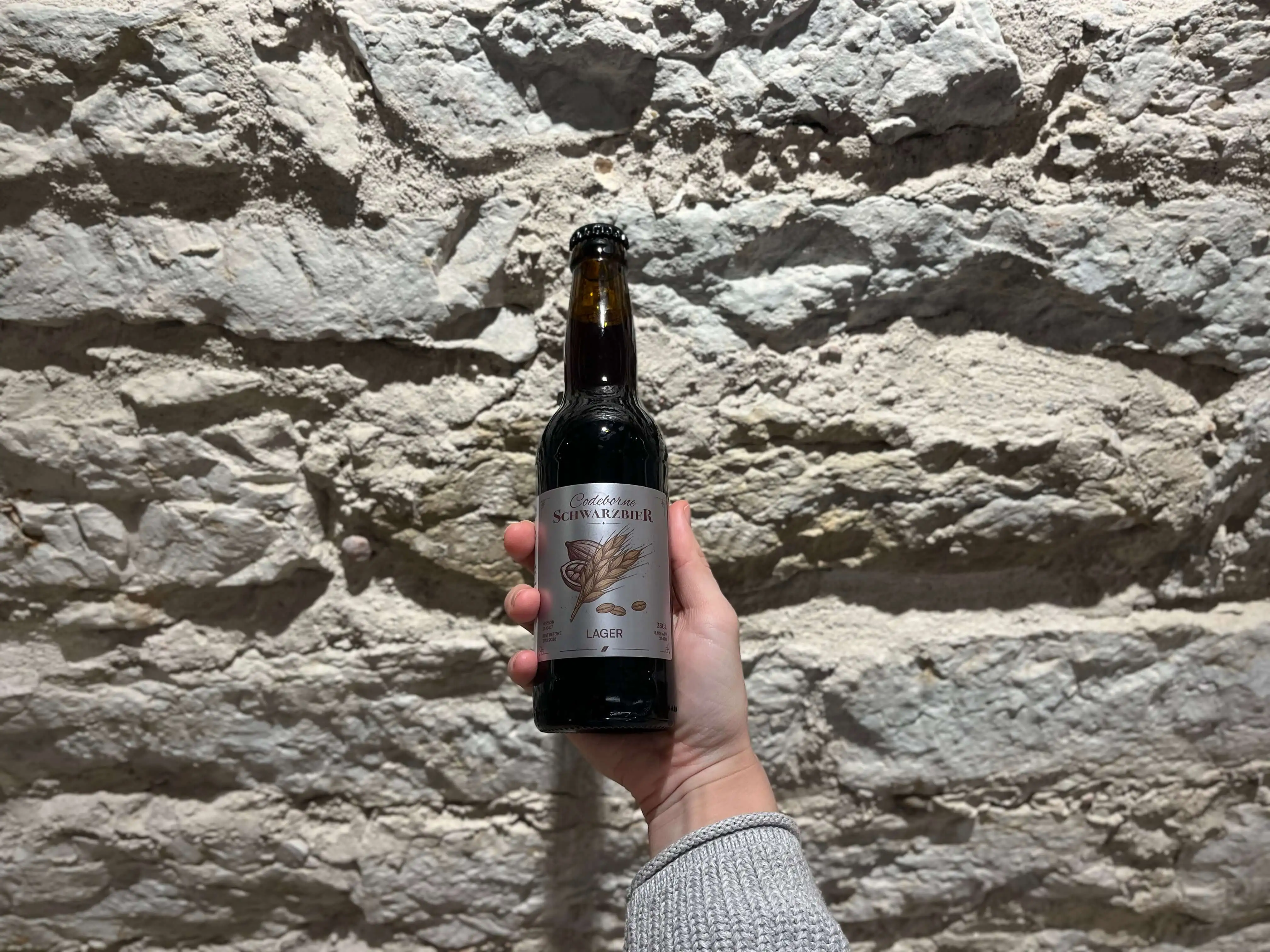
Now we wait. But not with our hands in our laps, no. We still need to design labels for the beer bottles! Luckily, we also have designers in the company. They tend to be quite good at that sort of thing, or so I hear. We left this important matter in the capable hands of Anna. In typical designer fashion, she started by asking us many questions. But it was worth it. The design came back quite nice. A few tweaks and we were all rather happy with it. Understated, traditional, tasteful.
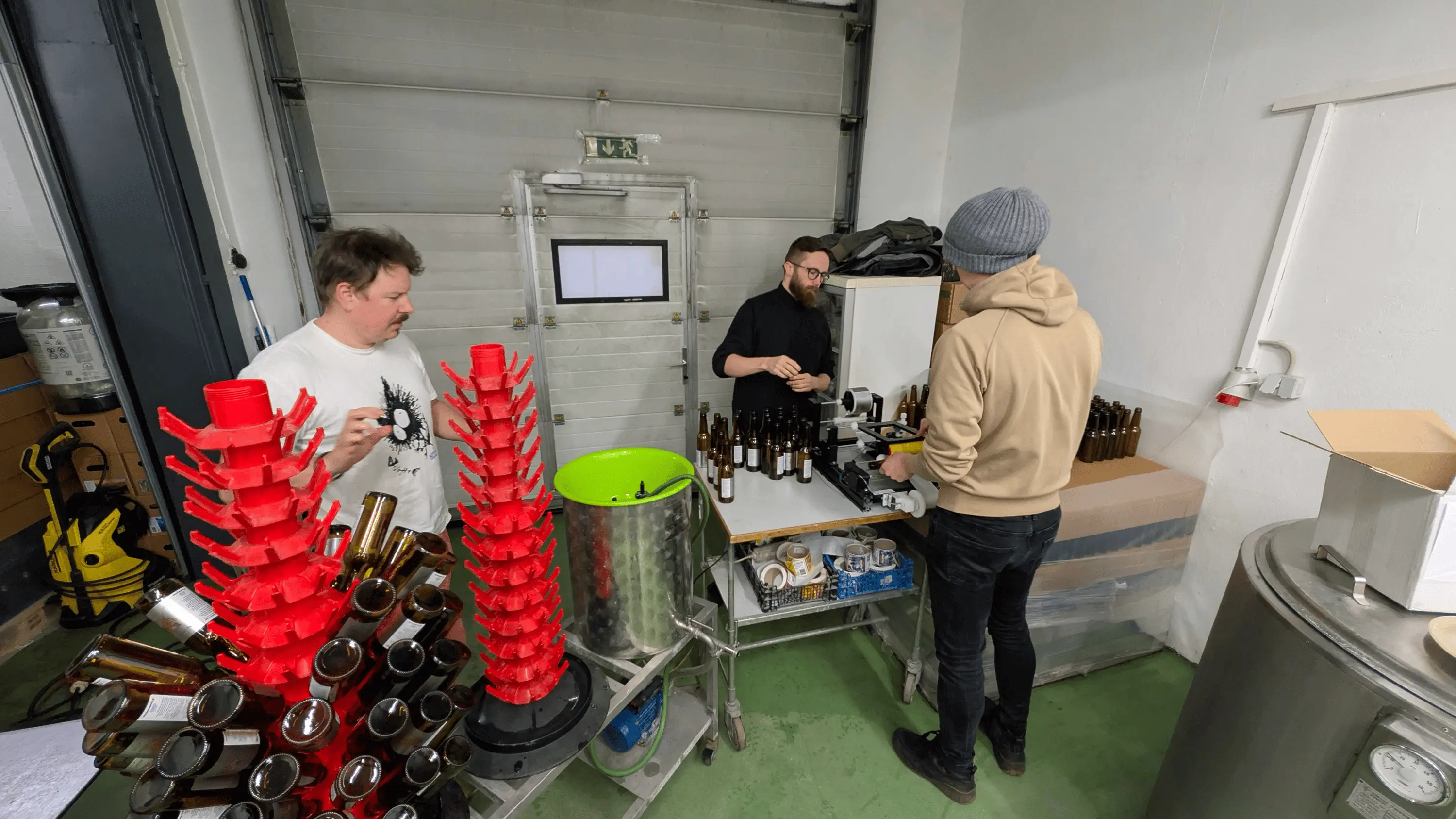
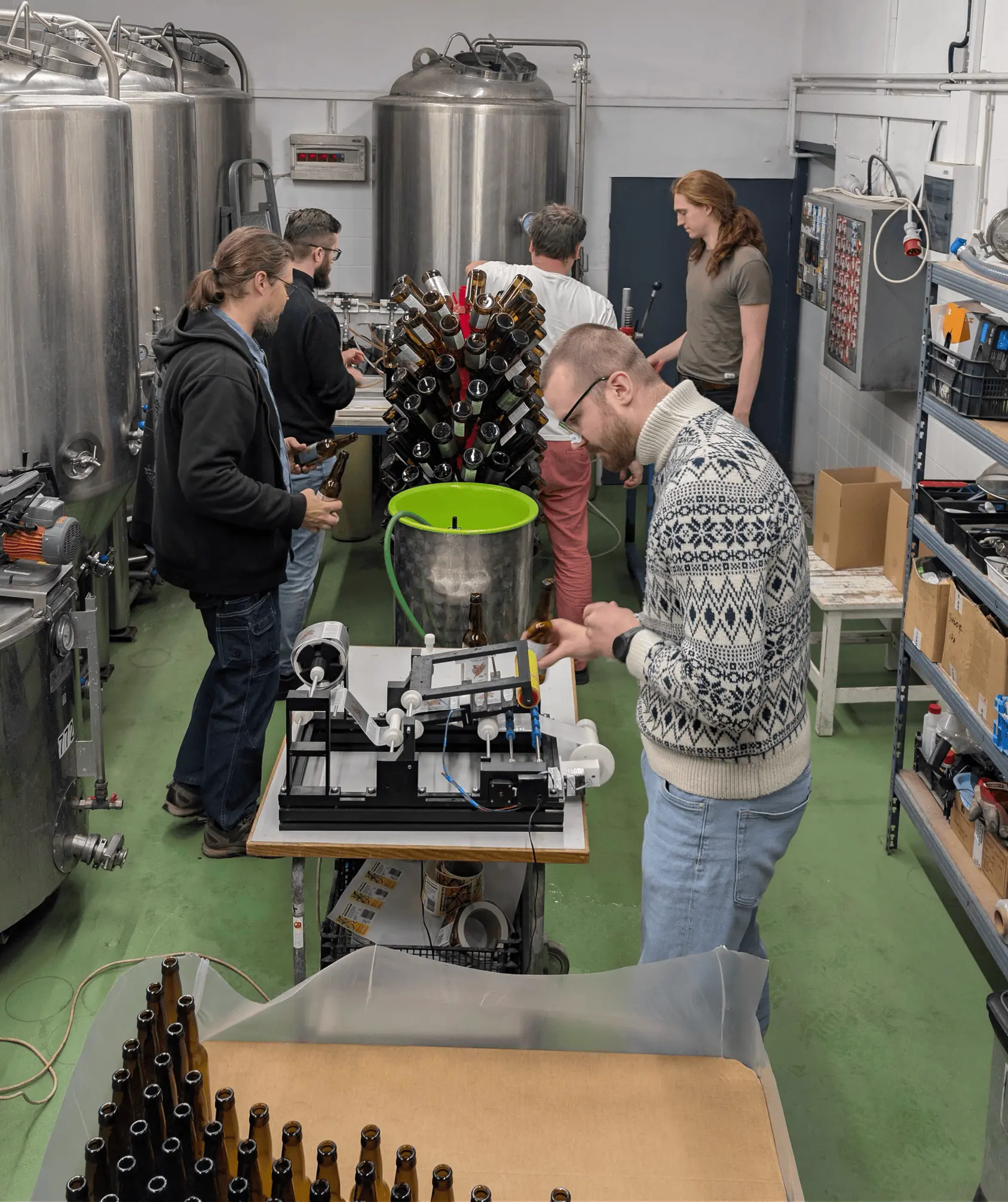
It was in November that we went back to the brewery. We had brewed the beer, yes, but it still needed to go into bottles. There was not as many of us, but still a few. So a conveyer of sorts was organized. Some people labelled the bottles, some sanitized them (wash them so that no bacteria or other contaminants would remain on the inside), and a few people manned the bottling station; one capped the bottles. The work afforded time to talk and joke, but not a lot to sample the end result. Which is a shame, because it turned out to be one of the best in recent memory.
So I hope that everybody that received their Christmas gifts from us had a chance to enjoy it. It’s good. Some say the best we have brewed so far.
Join Codeborne!
Codeborne is full of interesting people and exciting challenges. We’re expanding our team and currently looking for a full-stack developer. If you love solving real-world challenges with a skilled team, we’d love to hear from you!
Learn more about the Codeborne experience Experience at CodeborneOur recent stories
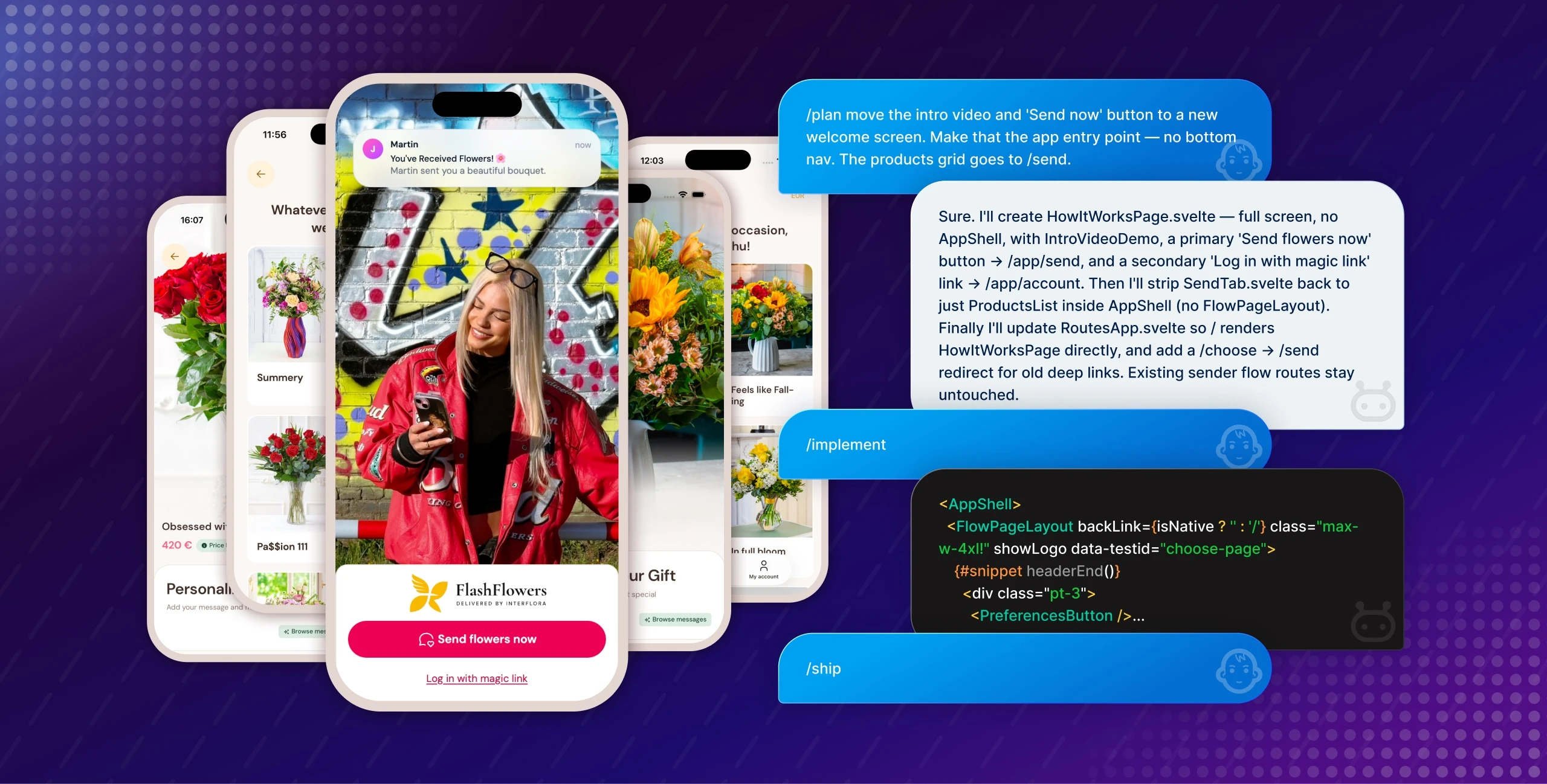
Flowers for a new generation - live in one month with AI as the pair programmer
How a long-time client's idea for reaching younger customers became our first project built systematically with AI from end to end - prototype, code, and content - while keeping every line reviewed and owned by us.
A bank built in 8 months - licence confirmed, deadline met
Build or buy? When the client came to us, that question was still open. We recommended building. No vendor lock-in, no paying for features you'll never use, no waiting on someone else's roadmap. A codebase you own. A product you control. They agreed. That put more weight on us - and we were fine with that.
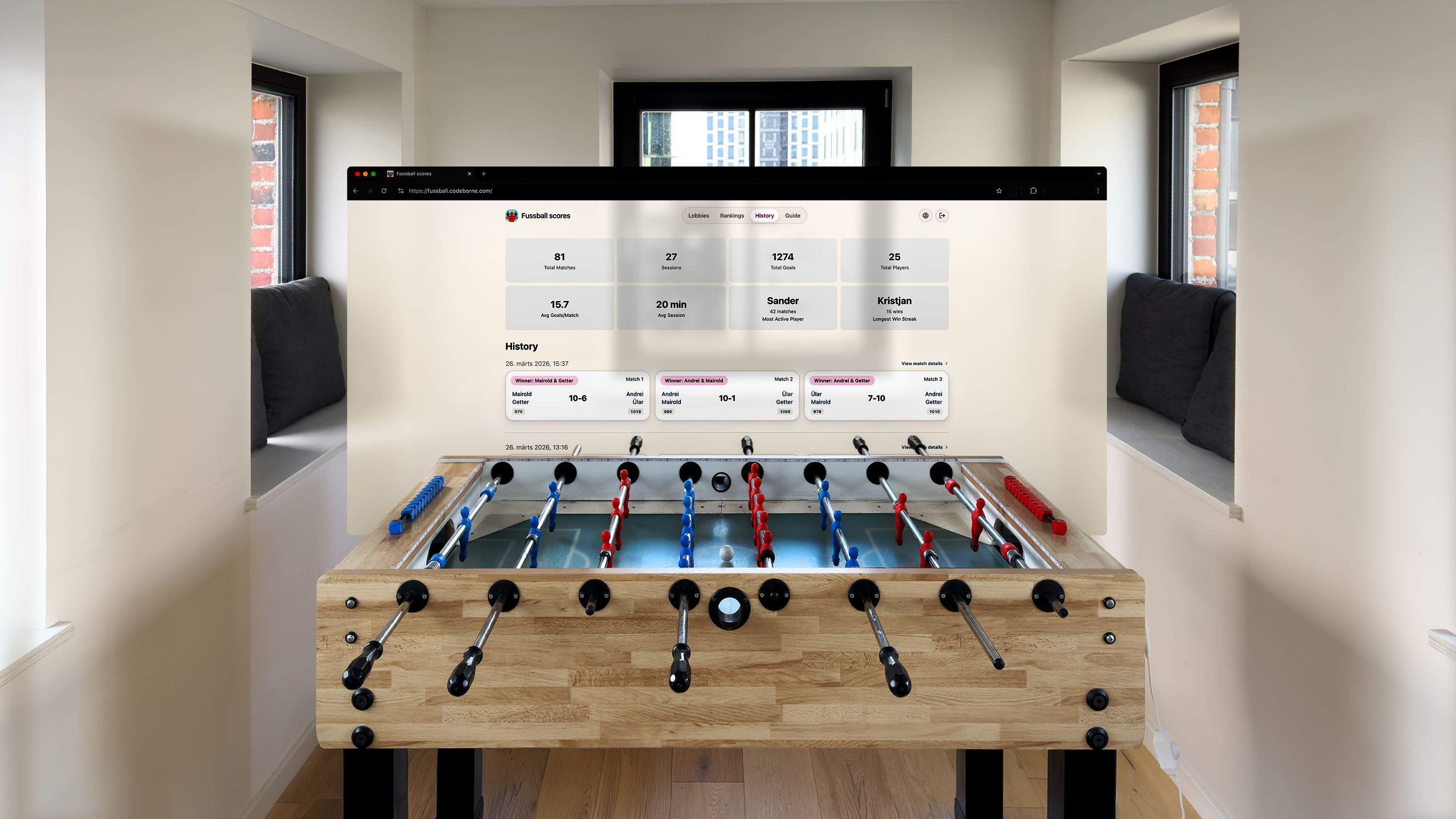
The story of Mihkel and Misha creating the Fussball app
We now have our own internal app called Fussball. We talked to its creators, Misha and Mihkel, about what it does and what motivated them to spend their free time building it.