Unit-test evolution
This is an example of unit-test evolution which I presented on recent devclub.eu workshop.Let’s consider 3 revisions of the same unit-test class.This is the first revision of this class:
public class ReferenceNumberTest {
  @Test
  public void testValidate() {
    assertFalse( ReferenceNumber.validate("1234567890123") );
    assertFalse( ReferenceNumber.validate("1234567") );
    assertTrue( ReferenceNumber.validate("12345678") );
  }
}
We call it a typical unit-test.At some moment, some developer decides to apply some TDD best practices and split this test-method into 3 with some meaningful names.This is what he got:
public class ReferenceNumberTest {
  @Test
  public void testTooLong() {
    String len13 = "1234567891111";
    assertEquals(len13.length(), 13);
    assertEquals(ReferenceNumber.validate(len13), false);
  }


  @Test
  public void testTooShort() {
    String len7 = "1234567";
    assertEquals(len7.length(), 7);
    assertEquals(ReferenceNumber.validate(len7), false);
  }


  @Test
  public void testOk() {
    String len8 = "12345678";
    assertEquals(len8.length(), 8);
    assertEquals(ReferenceNumber.validate(len8), true);


    String len12 = "123456789111";
    assertEquals(len12.length(), 12);
    assertEquals(ReferenceNumber.validate(len12), true);
  }
}
We call it good unit-test.After some time, some developer decides that even this good unit-test is not human-readable and does not provide enough information about how class ReferenceNumber should work. He continued splitting and renaming.This is what he got at the end:
public class ReferenceNumberTest {
  @Test
  public void nullIsNotValidReferenceNumber() {
    assertFalse(ReferenceNumber.validate(null));
  }


  @Test
  public void referenceNumberShouldBeShorterThan13() {
    assertFalse(ReferenceNumber.validate("1234567890123"));
  }


  @Test
  public void referenceNumberShouldBeLongerThan7() {
    assertFalse(ReferenceNumber.validate("1234567"));
  }


  @Test
  public void referenceNumberShouldContainOnlyNumbers() {
    assertFalse(ReferenceNumber.validate("1234567ab"));
    assertFalse(ReferenceNumber.validate("abcdefghi"));
    assertFalse(ReferenceNumber.validate("---------"));
    assertFalse(ReferenceNumber.validate(" "));
  }


  @Test
  public void validReferenceNumberExamples() {
    assertTrue(ReferenceNumber.validate("12345678"));
    assertTrue(ReferenceNumber.validate("123456789"));
    assertTrue(ReferenceNumber.validate("1234567890"));
    assertTrue(ReferenceNumber.validate("12345678901"));
    assertTrue(ReferenceNumber.validate("123456789012"));
  }
}
We call it BDD style specification.And finally, the most interesting part. During preparing for the workshop, I have discovered that I haven’t copied the original source code of the class ReferenceNumber being tested. Panic! One day left! I had to urgently re-create it from scratch!Now look at these 3 test-classes, and imagine, which of them helped me to create class ReferenceNumber.
Our recent stories
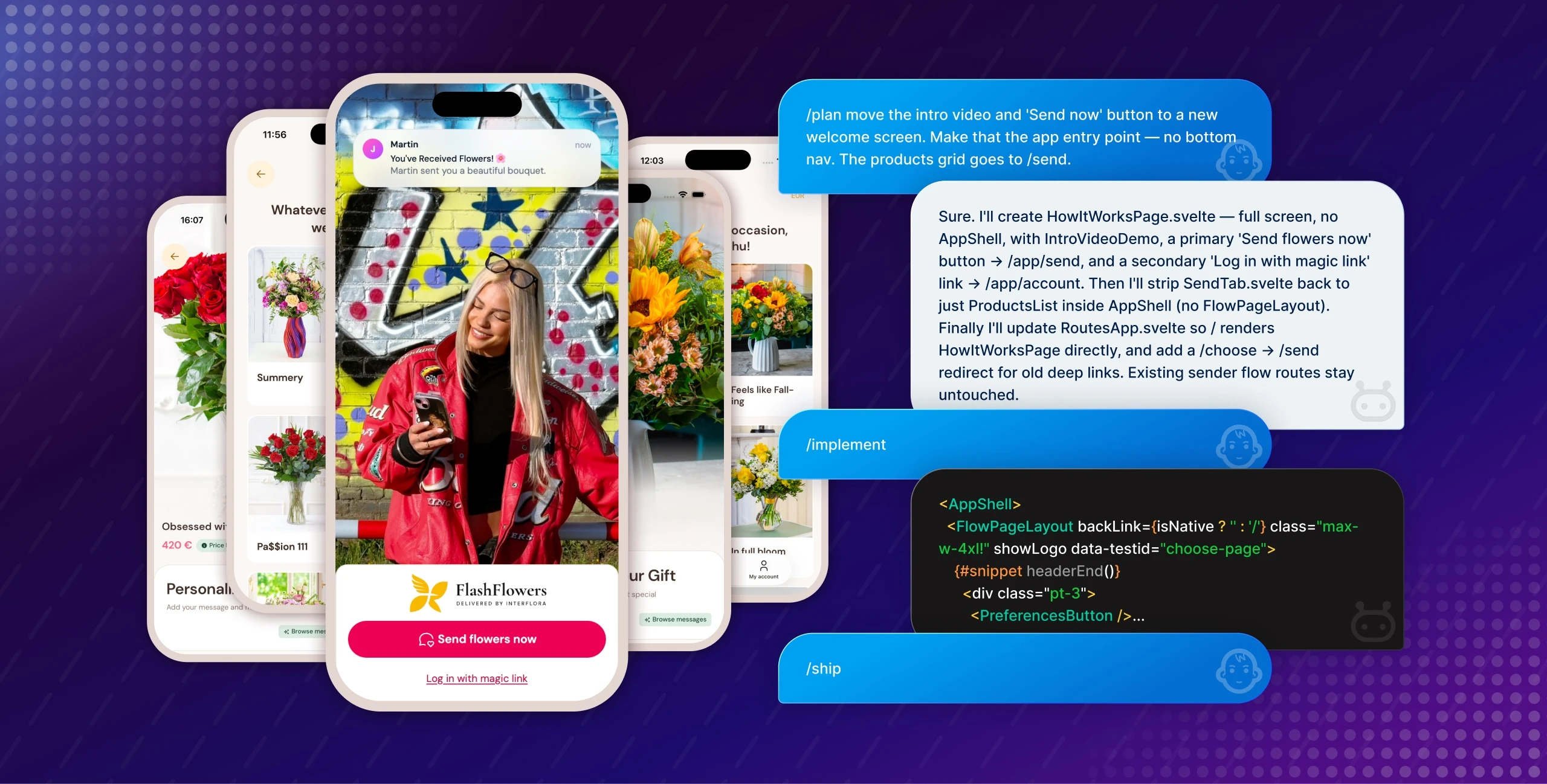
Flowers for a new generation - live in one month with AI as the pair programmer
How a long-time client's idea for reaching younger customers became our first project built systematically with AI from end to end - prototype, code, and content - while keeping every line reviewed and owned by us.

A bank built in 8 months - licence confirmed, deadline met
Build or buy? When the client came to us, that question was still open. We recommended building. No vendor lock-in, no paying for features you'll never use, no waiting on someone else's roadmap. A codebase you own. A product you control. They agreed. That put more weight on us - and we were fine with that.
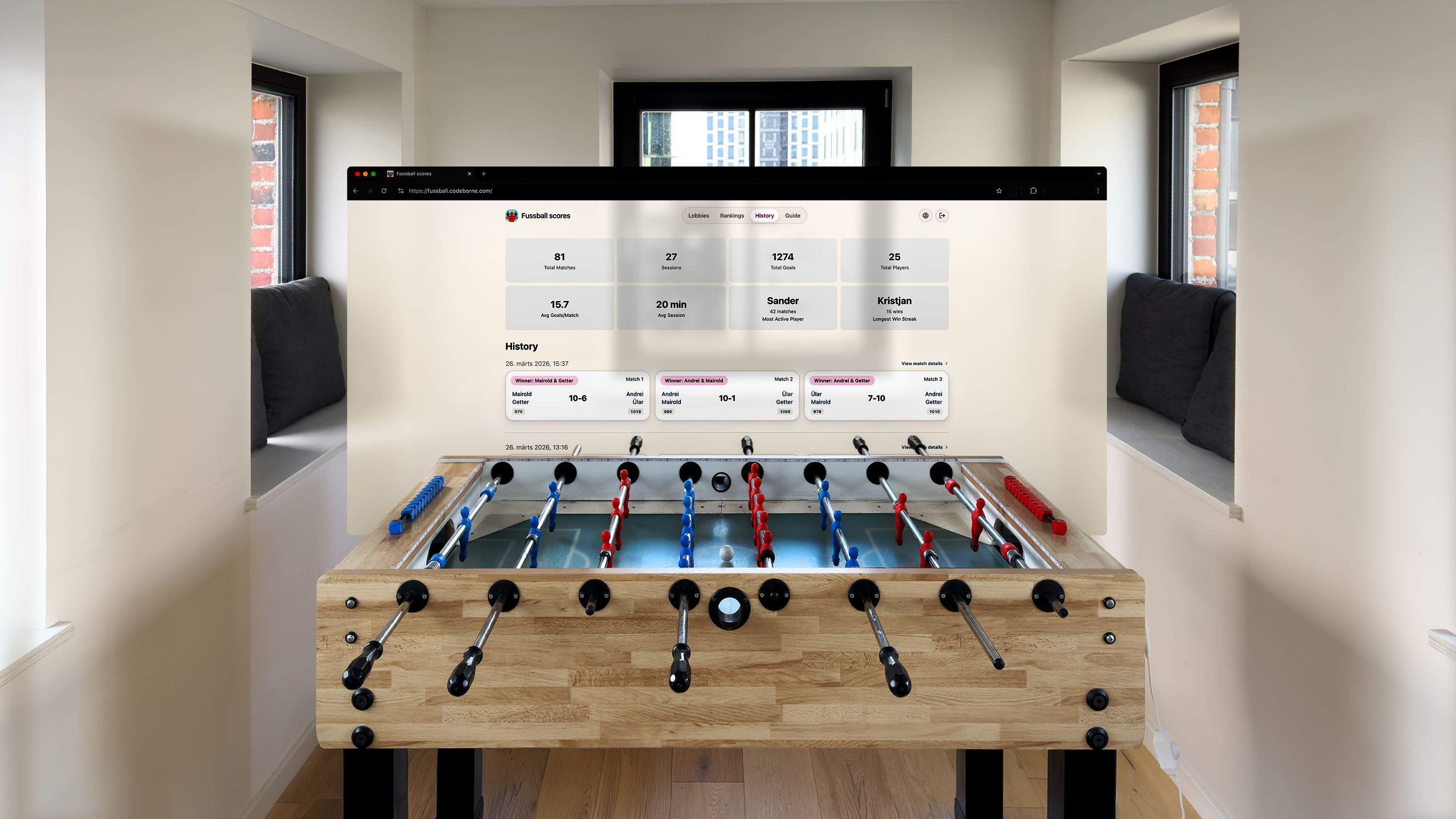
The story of Mihkel and Misha creating the Fussball app
We now have our own internal app called Fussball. We talked to its creators, Misha and Mihkel, about what it does and what motivated them to spend their free time building it.